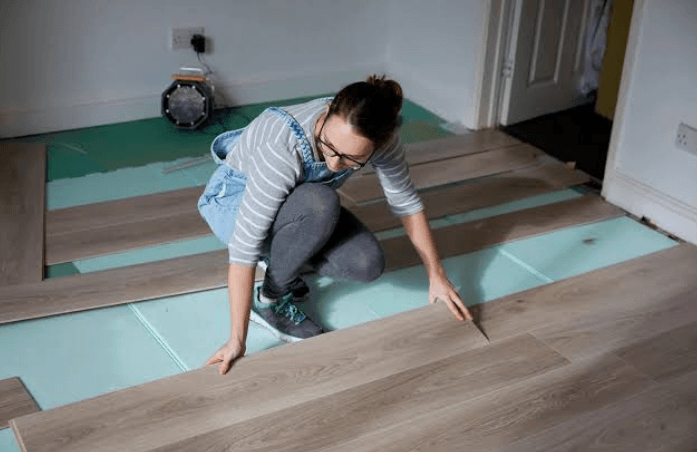
Laminate flooring gets described as easy, affordable, and quick to install, and all of that is true. What gets left out is the engineering that makes those qualities possible. Understanding how a floating laminate floor behaves explains both why it succeeds and why the occasional installation goes wrong.
The term itself is the clue. A floating floor is not glued or nailed to the surface beneath it. It rests on top, held together by the planks locking into one another, free to expand and contract as a single connected layer. That simple principle governs everything about how these floors should be bought, installed, and lived with.
The anatomy of a laminate plank
A laminate plank is a sandwich of engineered layers, each with a job. The bottom is a stabilizing backing that resists moisture and keeps the plank flat. Above it sits a dense core, usually high-density fibreboard, which gives the plank its strength and its resistance to dents.
On top of the core rides a printed decorative layer, a photographic image of wood, stone, or tile applied with impressive realism. Sealing everything is a clear wear layer, a tough transparent coating that takes the daily abuse of feet, furniture, and cleaning. The quality of that wear layer largely determines how long the floor keeps looking new, which is why comparing wear ratings matters more than comparing looks.
Why floating floors expand and contract
Because the planks are not fastened down, the whole floor moves as a unit with changes in temperature and humidity. In a Quebec home, where winter heating dries the air and summer brings humidity, that movement is significant across a season. A floating floor is engineered to accommodate it, but only if installed correctly.
This is where the expansion gap comes in. A quality supply of floating laminate floors will come with clear guidance to leave a small gap around the entire perimeter of the room, hidden later by baseboards or quarter round. Skip that gap, and the expanding floor has nowhere to go. It buckles, lifting into ridges that no amount of weight will flatten. Brands like Pergo, Mohawk, and Shaw all specify this gap for the same reason: the floor must be free to move.
The role of the underlayment
Between the subfloor and the laminate sits an underlayment, and it does more than most buyers realize. It cushions footsteps, dampens the hollow sound laminate can produce, and smooths minor imperfections in the subfloor below.
In areas prone to moisture, a vapour barrier underlayment adds protection, resisting dampness that could otherwise reach the plank cores from below. Some laminate products arrive with underlayment pre-attached, while others require it as a separate purchase. Knowing which you are buying prevents an unpleasant surprise on installation day, and choosing the right underlayment for the space affects both comfort and longevity.
Subfloor preparation is not optional
A floating floor telegraphs whatever lies beneath it. A dip in the subfloor becomes a soft, flexing spot underfoot. A high point becomes a place where planks rock and joints stress. Because the floor is not fastened down, it cannot be forced to conform to an uneven surface.
The remedy is preparation. A subfloor should be flat within a specified tolerance over a given span, clean, and dry. Filling low spots and sanding high ones before installation prevents the flex and noise that make a floating floor feel cheap. This step is invisible in the finished result, which is exactly why it gets skipped, and exactly why skipping it shows.
Where laminate suits, and where it struggles
Laminate performs beautifully in living rooms, bedrooms, hallways, and most everyday spaces. Its wear layer shrugs off traffic, and its click-together design forgives beginners. For a large area on a budget, few options match its combination of durability and value.
Its weakness is standing water. Traditional laminate cores swell when saturated, so a flooded bathroom or a persistent leak can ruin planks that would otherwise last for years. Water-resistant and waterproof laminate products have narrowed this gap considerably, but even they benefit from prompt cleanup of spills. Knowing this limit helps a buyer choose the right product for a kitchen or entryway rather than assuming every laminate handles moisture equally.
Acclimation: the wait that prevents problems
One step separates a smooth laminate installation from a troubled one, and it happens before a single plank is locked together. Laminate needs to acclimate to the room where it will live. Delivered from a cool warehouse into a heated home, the planks carry a different temperature and moisture content than the space around them, and installing them immediately invites trouble.
The remedy is patience. Leaving the boxes flat in the room for a day or two, sometimes longer depending on the product, lets the planks adjust to the home’s conditions. A floor installed at the wrong moisture content will move more than expected afterward, straining the joints and the expansion gaps. This waiting period feels like wasted time to an eager installer, but it prevents the gapping and buckling that show up weeks later.
Climate makes this especially relevant in Quebec homes. The swing between a dry, heated winter and a humid summer is dramatic, and laminate installed during one extreme must cope with the other. Acclimating the planks and respecting the expansion gaps around the perimeter give the floor room to breathe across that annual cycle. Skipping the wait to finish a day sooner is a false economy, because the problems it causes take far longer to fix than the acclimation would have taken to prevent.
See also: Brisbane Commercial Burnished Concrete: A Complete Guide for Businesses
Living with a floating floor
Once installed, a laminate floor asks for little. Regular sweeping and a barely damp mop keep it clean, while excessive water and harsh abrasives are the main things to avoid. Felt pads under furniture legs prevent scratches, and entry mats catch the grit that would otherwise grind against the wear layer.
The floating design that makes installation easy also makes repairs and replacement simpler down the road. Because nothing is glued down, a damaged section can often be disassembled and rebuilt without destroying the whole floor. That flexibility, combined with a realistic price and genuine durability, explains why floating laminate has become such a common choice for Quebec renovations. It works because of its engineering, and it lasts when that engineering is respected. Treat the expansion gap, the underlayment, the subfloor, and the acclimation as the non-negotiables they are, and a floating laminate floor delivers years of quiet, affordable service. Cut a corner on any of them, and the same floor finds a way to remind you which step was skipped.
