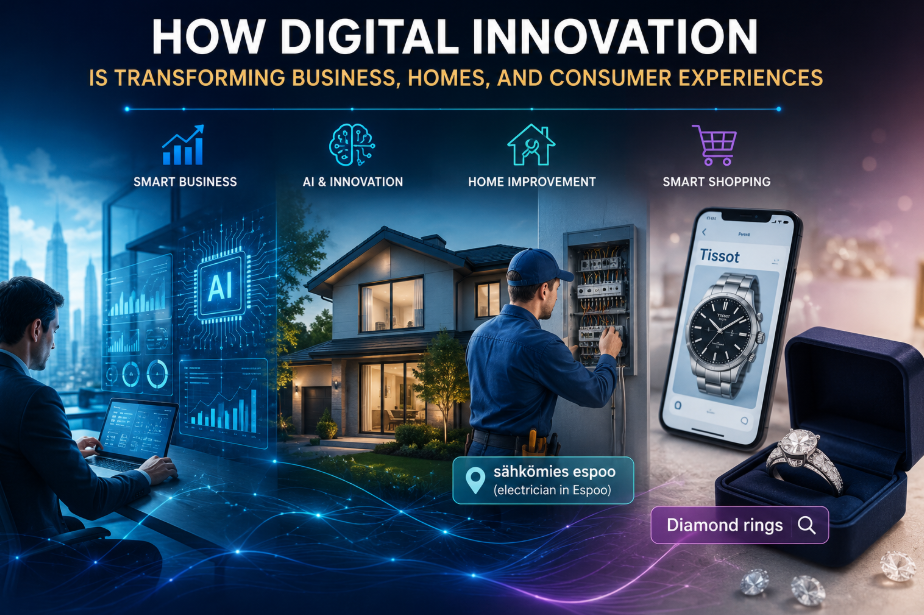
Innovation is no longer limited to laboratories or large technology companies. It has become part of everyday life, influencing how businesses operate, how homeowners manage renovation projects, and even how consumers shop for meaningful purchases. From intelligent software that streamlines complex operations to digital platforms that simplify home improvement and modern e-commerce experiences, technology is creating new opportunities across industries.
The biggest advantage of today’s digital landscape is its ability to connect different sectors. Businesses can use advanced analytics to improve productivity, homeowners can find reliable professionals more efficiently, and shoppers can access detailed information before making purchasing decisions. This combination of convenience, transparency, and intelligent decision-making continues to redefine expectations for both companies and consumers.
Why Digital Transformation Is No Longer Industry-Specific
Digital transformation was once viewed as something reserved for technology companies. Today, nearly every industry benefits from adopting modern digital tools. Manufacturing, retail, construction, healthcare, and professional services all rely on software to improve communication, automate repetitive tasks, and deliver better customer experiences.
Organizations that embrace innovation often discover unexpected benefits beyond efficiency. Improved collaboration, stronger customer relationships, and data-driven planning help businesses remain competitive even during periods of economic uncertainty.
See also: Home Office Organization Tips
Enterprise AI Is Becoming a Competitive Advantage
Artificial intelligence has evolved beyond simple automation. Modern enterprise AI solutions help organizations analyze enormous amounts of information, identify patterns, predict business outcomes, and support faster decision-making.
Rather than replacing employees, AI enhances their productivity by handling repetitive tasks while allowing professionals to focus on strategic initiatives. Customer service teams receive intelligent recommendations, finance departments detect unusual spending patterns, and operations managers gain real-time insights into performance.
As organizations continue investing in AI-driven technologies, businesses of all sizes are discovering practical ways to improve efficiency without sacrificing quality or customer satisfaction.
Technology Is Making Home Improvement More Accessible
Home improvement has traditionally involved lengthy research, multiple phone calls, and uncertainty about finding qualified professionals. Digital platforms have significantly simplified this process by connecting homeowners with experienced contractors while improving transparency throughout renovation projects.
Consumers can compare services, review previous work, communicate directly with professionals, and manage project timelines online. This reduces uncertainty while encouraging higher service standards across the industry.
For homeowners planning electrical upgrades, for example, searching for a sähkömies espoo (electrician in Espoo) allows them to locate local professionals who specialize in electrical installations, maintenance, and residential repair services. Digital marketplaces make it easier to compare expertise and select the right contractor for each project.
Smart Consumers Research Before They Buy
The internet has fundamentally changed purchasing behavior. Instead of relying solely on advertising, consumers now compare products, read reviews, watch demonstrations, and evaluate long-term value before making important buying decisions.
This shift benefits both buyers and businesses. Companies that provide detailed product information, transparent pricing, and educational resources often earn greater customer trust.
Luxury products illustrate this trend particularly well. Buyers interested in premium watches frequently spend considerable time researching craftsmanship, movement types, warranty options, and long-term value before selecting brands such as Tissot. Detailed product information and expert guidance have become nearly as important as the products themselves.
E-Commerce Is Raising Customer Expectations
Online shopping has evolved far beyond convenience. Consumers now expect personalized recommendations, fast delivery, secure payment systems, and responsive customer support regardless of the products they purchase.
Retailers increasingly invest in digital experiences that make browsing easier while helping customers make confident purchasing decisions. High-quality product photography, comparison tools, customer reviews, and virtual consultations all contribute to a better shopping experience.
Businesses that successfully combine technology with exceptional customer service often build stronger long-term relationships than those focusing only on pricing.
Digital Trust Matters More Than Ever
Consumers willingly share information when they trust businesses to handle their data responsibly. Strong cybersecurity practices, transparent privacy policies, and secure payment systems have become essential components of modern business operations.
Organizations that prioritize digital trust often experience higher customer retention because people value security alongside convenience. Building confidence requires continuous investment in both technology and communication.
Personalization Is Changing Online Retail
Today’s shoppers expect experiences tailored to their preferences. Recommendation engines, browsing history, and intelligent search functions help retailers present products that better match individual interests.
Personalization extends beyond entertainment or fashion. It also influences industries such as home improvement, consumer electronics, travel, and luxury retail. Businesses that understand customer preferences can provide more relevant recommendations while reducing information overload.
For example, customers shopping for engagement gifts or celebrating important milestones often appreciate curated collections that simplify the selection process. Premium retailers offering carefully designed Diamond rings collections can improve customer confidence by providing educational buying guides, certification details, and customization options alongside their products.
Digital Platforms Support Better Decision-Making
One of the greatest advantages of modern technology is improved access to information. Whether someone is choosing software for their business, hiring a contractor, or purchasing a premium product, digital resources help reduce uncertainty.
Comparison tools, verified customer reviews, educational articles, and transparent pricing all contribute to smarter decisions. Rather than replacing professional advice, digital platforms complement expert guidance by giving consumers a stronger foundation for evaluating available options.
Collaboration Across Industries Creates More Value
Innovation rarely happens in isolation. Technology companies develop advanced software, service marketplaces connect professionals with customers, and retailers continuously improve digital shopping experiences. Together, these industries create an ecosystem that benefits businesses and consumers alike.
Artificial intelligence supports business operations, digital platforms simplify complex services, and e-commerce expands access to quality products worldwide. Each advancement reinforces another, creating a cycle of continuous improvement.
Organizations that recognize these connections are often better positioned to adapt to changing customer expectations while discovering new opportunities for growth.
Looking Ahead
Digital innovation will continue influencing nearly every aspect of modern life. Businesses will rely on smarter technologies, consumers will expect increasingly personalized experiences, and digital platforms will further simplify complex tasks that once required significant time and effort.
Success will depend not only on adopting new technology but also on using it responsibly to create genuine value. Companies that focus on transparency, customer experience, and practical innovation will remain well-positioned as digital transformation continues shaping the future across industries.
