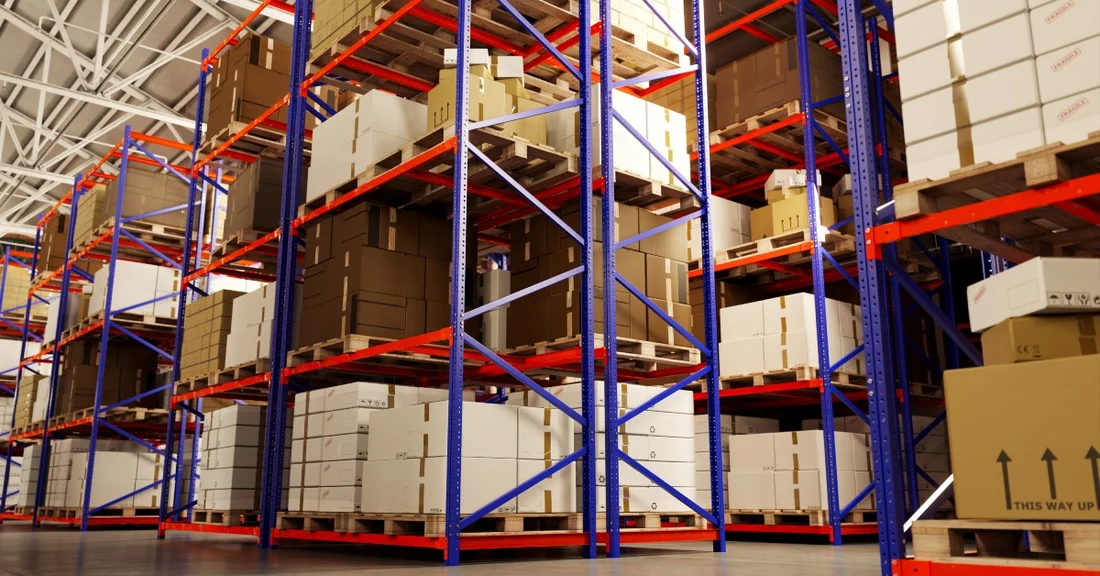
A lot of overloaded racking doesn’t look overloaded. There’s no obvious sag, no visible cracking, nothing that jumps out during a quick walkthrough. That’s exactly what makes capacity such a dangerous thing to guess at. Most facility managers assume their pallet warehouse racking can hold whatever fits physically between the uprights, when in reality capacity depends on a much longer list of factors than most people realize until something goes wrong.
Racking capacity isn’t one number. It’s a combination of the frame, the beams, the configuration, the floor underneath it, and how the load is actually distributed. Change any one of those and the safe capacity changes with it, even if the racking itself looks identical to what was there before.
Beam Strength Sets the Ceiling
Beam capacity is usually the first thing people check, and for good reason. Every beam has a rated load capacity per level, set by the manufacturer based on the steel gauge, the beam profile, and the connector type. That number assumes a specific load distribution across the beam, usually evenly spread across two or more pallets.
Here’s where people get tripped up. A beam rated for four thousand pounds per level doesn’t mean you can drop a four-thousand-pound pallet in the middle of it and call it good. Concentrated loads behave differently than distributed ones, and a single heavy pallet centered on a beam puts far more stress on it than the same weight split across two positions. This is a detail that gets missed constantly, and it’s one of the more common reasons racking fails even when nobody exceeded the “total” weight rating.
Upright Frames and Column Capacity
Uprights carry the cumulative weight of everything stacked above them, which means capacity has to be calculated top to bottom, not level by level in isolation. A frame that’s perfectly fine holding moderate loads across four levels can be pushed past its limit if the top level gets loaded heavier than the rest, because that weight has to travel down through every connection point below it.
Bracing matters here too. Diagonal and horizontal bracing between frames keeps the whole structure rigid, and if that bracing gets damaged, loosened, or removed during a reconfiguration, the column capacity drops even though nothing about the actual steel changed. This is one of those things that’s easy to overlook because a slightly loose brace doesn’t look urgent, but it directly affects how much weight the frame can actually carry.
Forklift damage is a factor that deserves more attention than it usually gets. A dented upright might look cosmetic, but even minor deformation can significantly reduce load capacity. Racking manufacturers publish clear guidelines on how much damage is tolerable before a frame needs to be taken out of service, and most facilities aren’t checking against those guidelines nearly often enough.
Floor Condition and Anchoring
The floor underneath the racking is part of the capacity equation, not a separate consideration. Concrete slab thickness, condition, and anchor bolt integrity all affect how much load the racking can safely transfer downward. Cracked or deteriorating concrete around anchor points reduces holding strength even if the racking itself is in perfect condition.
Anchoring gets overlooked constantly because it’s not visible once everything is installed. A rack that was properly anchored during installation can end up with loosened bolts over time from vibration, forklift impacts, or seismic activity in some regions. Periodic anchor checks aren’t glamorous work, but they’re part of what actually keeps a fully loaded rack system stable.
Configuration and Load Distribution
How a warehouse is actually laid out changes what the racking can handle just as much as the equipment specs do. Beam levels, bay widths, and aisle configurations all interact with capacity in ways that aren’t obvious from a spec sheet alone. Two warehouses with identical racking hardware can have very different safe capacities depending on how everything is configured and loaded day to day.
This is where a lot of facilities run into trouble after expanding or shifting operations. Maybe pallet sizes changed, maybe a new product line is heavier than what the racking was originally speced for, maybe throughput increased and now more positions are loaded to capacity at once. Any of these changes can push a system past its safe limits even though nothing about the racking itself was physically altered. It’s part of why capacity planning tends to come up alongside broader warehouse automation projects, since adding conveyor lines, sortation, or automated retrieval often means rethinking racking configuration at the same time rather than treating it as a separate decision later.
Seismic and wind load requirements factor in too, depending on region and building type. These aren’t things most warehouse teams think about day to day, but they’re baked into the original engineering, and any significant reconfiguration needs to account for them again rather than assuming the original calculations still apply.
Why Load Capacity Plans Go Out of Date
Capacity isn’t something you calculate once and forget about. Product changes, throughput increases, and facility modifications all chip away at the assumptions the original design was based on. A warehouse racking system engineered five years ago for a specific product mix might be significantly under-rated or over-rated for what’s actually being stored on it today.
Regular capacity reviews catch this drift before it becomes a safety issue. This means checking actual load weights against rated capacity, inspecting for damage, verifying anchor integrity, and confirming that beam load charts posted on the racking still match reality. A lot of facilities have load capacity signage that hasn’t been updated in years, sometimes referencing racking that’s been partially replaced or reconfigured since the sign went up.
If your racking hasn’t had a proper capacity review in a while, or if your product mix or throughput has shifted since it was originally installed, it’s worth getting an actual assessment rather than assuming the original numbers still hold. You can reach out to us to have someone take a real look at your current setup and flag anything that needs attention before it becomes a bigger problem.
Getting capacity right isn’t about overengineering everything to be safe. It’s about understanding exactly what your specific setup can handle, under your actual loading conditions, so decisions about storage aren’t based on guesswork. The difference between a system that performs well for a decade and one that fails prematurely usually comes down to whether someone was actually paying attention to these details, not whether the racking was expensive to begin with.
