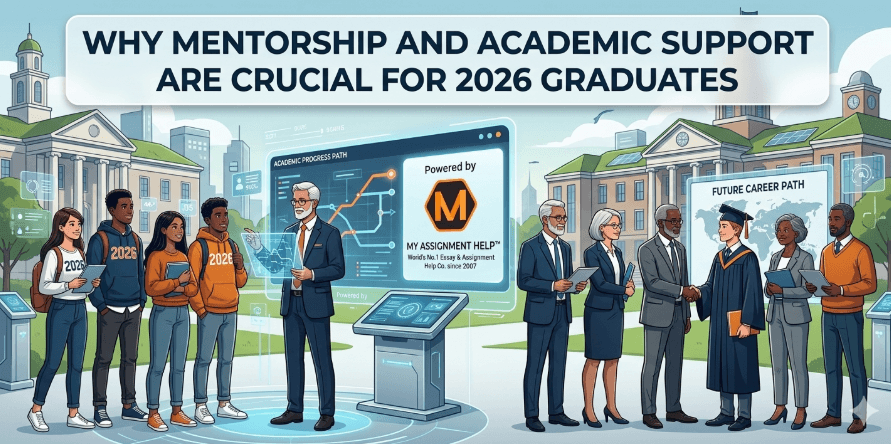
The Class of 2026 is entering a labor market defined by a startling paradox. While the Bureau of Labor Statistics (BLS) continues to report historically low unemployment in professional sectors, the “skills gap”—the distance between academic theory and workplace utility—has widened into a canyon. As generative AI redefines entry-level roles and hybrid work models demand unprecedented self-regulation, the traditional “solo” approach to higher education is no longer a viable path to success. For today’s students, professional longevity isn’t just about what you know; it’s about the speed and precision with which you can apply that knowledge in a volatile environment.
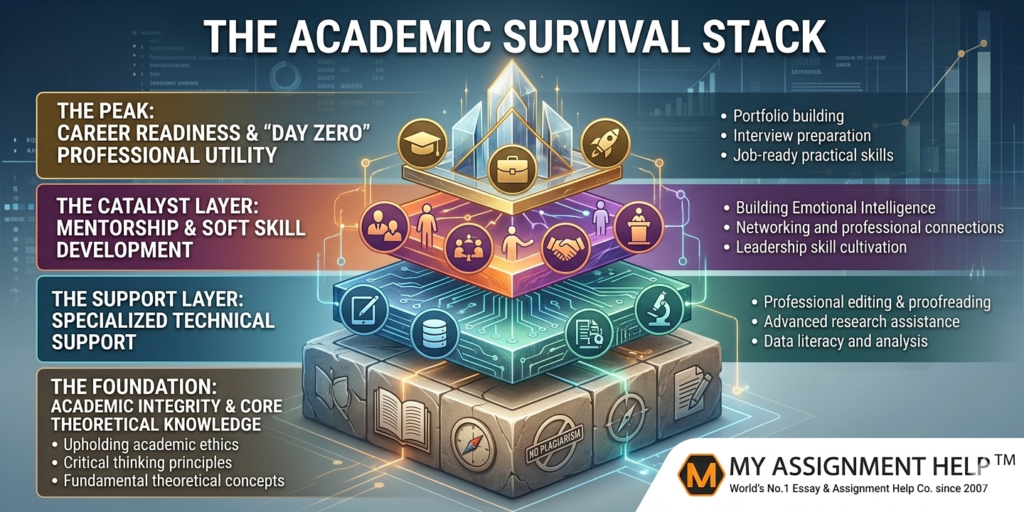
In this high-stakes landscape, the synthesis of human guidance and technical assistance has transitioned from a luxury to a baseline requirement for survival. Students navigating complex, multi-disciplinary curricula often find that myassignmenthelp provides the necessary structural foundation to manage overwhelming workloads without sacrificing quality. By utilizing custom assignment help, learners can effectively bridge the gap between abstract classroom concepts and the rigorous, data-driven standards of professional documentation. This dual approach—professional academic scaffolding combined with interpersonal mentorship—is the essential “secret sauce” for the modern graduate aiming for the top tier of the workforce.
1. The Skills Gap and the Reality of “Day Zero” Readiness
According to a comprehensive 2024 report by the National Association of Colleges and Employers (NACE), nearly 50% of employers feel that recent graduates are under-prepared in the realms of critical thinking and professional communication. The Class of 2026, many of whom spent their formative academic years in digital-first or “emergency remote” learning environments, often faces a “fluency deficit” in traditional corporate dynamics and high-level technical writing.
Mentorship provides the “unwritten rules” of the industry. Whether it’s understanding the nuances of office politics, learning how to pitch a project to stakeholders, or mastering the emotional intelligence required for value speech topics and presentations, a mentor offers a perspective that a textbook simply cannot replicate. Mentorship acts as a longitudinal study of success, where the student benefits from the decades of trial and error experienced by the professional.
2. Mitigating the Burnout Epidemic through Strategic Support
The mental health crisis on American campuses is not just a headline; it is a systemic barrier to graduation. The Healthy Minds Study indicated that over 40% of students report symptoms of depression or anxiety, with “academic stress” cited as the primary driver. The pressure to maintain a 4.0 GPA while simultaneously building a resume through internships and extracurriculars is a recipe for cognitive collapse.
Professional academic support acts as a critical release valve. By delegating the heavy lifting of initial research, citation management, and formatting to subject matter experts, students can focus their mental energy on high-level synthesis and creative problem-solving. This isn’t about avoiding work; it’s about strategic cognitive management. In the professional world, high-level executives have research assistants and junior associates to handle the “grunt work” so they can focus on strategy. Utilizing academic support services prepares students for this reality—teaching them how to manage resources to produce a superior final product.
3. Navigating the AI Frontier with the EEAT Framework
In 2026, Google’s EEAT (Experience, Expertise, Authoritativeness, and Trustworthiness) guidelines apply to more than just SEO; they have become the unofficial rubric for the “personal brands” of graduates. As AI-generated content saturates the web, human expertise has become more valuable, not less.
Employers are looking for graduates who can demonstrate:
- Experience: Real-world application of classroom theories.
- Expertise: A deep, nuanced understanding of their specific niche.
- Authoritativeness: The ability to present findings with confidence and clarity.
- Trustworthiness: A commitment to academic and professional integrity.
Mentors provide the “Experience” and “Expertise” by sharing real-world case studies and industry “war stories.” Meanwhile, academic support services build “Authoritativeness” by ensuring that every paper and project the student submits is backed by rigorous data and flawless logic. This builds a digital and physical trail of excellence that serves as a student’s most powerful marketing tool during the hiring process.
4. The Economic ROI of Academic Scaffolding
While some critics view external support as a shortcut, the economic data suggests a high Return on Investment (ROI). A study on student performance metrics shows that those who utilize professional editing and tutoring services see an average GPA increase of 15-20%. In high-competition fields like Finance, LegalTech, and Engineering, a difference of 0.5 on a GPA scale can be the difference between a $60,000 entry-level role and a $110,000 starting salary.
Furthermore, the time saved by using support services allows students to participate in unpaid internships or specialized certifications that further increase their market value. When viewed through the lens of a 40-year career, the “Skill-to-Salary Bridge” created by these early academic investments can result in hundreds of thousands of dollars in cumulative earnings.
Key Takeaways for 2026 Graduates
- Network Before You Need It: Mentorship is a long-term relationship. Start seeking industry mentors at least 18 months before your projected graduation date.
- Embrace the “Co-Pilot” Model: Just as pilots use automated systems and co-pilots, use academic support services to manage the technical bottlenecks of your degree.
- Focus on Numerical Fluency: Regardless of your major, the ability to interpret data and present it persuasively is the most in-demand skill of 2026.
- Prioritize Mental Health: You cannot build a career on a foundation of burnout. Use the resources available to you to maintain a sustainable pace.
See also: The Importance of Blockchain Infrastructure
Frequently Asked Questions (FAQ)
Q: Is using academic support services considered ethical in the 2026 job market?
A: Absolutely. When used as a supplemental study aid or “tutor-on-demand,” these services are ethically sound. They provide a blueprint for excellence, helping students understand complex rubrics and high-level research methodologies that they can then apply to their own work.
Q: How has the role of a mentor changed with the rise of AI?
A: Mentors are no longer just sources of information; they are sources of wisdom. While AI can provide facts, a mentor provides the context, ethics, and “human touch” that AI cannot replicate.
Q: Why is US-based academic support preferred for graduates in 2026?
A: Localization matters. US-based support understands the specific cultural nuances, grading rubrics, and professional expectations of the American labor market, ensuring the student’s work resonates with local recruiters.
About the Author
The author is a Senior Content Strategist at myassignmenthelp, specializing in the intersection of EdTech and career development. With over a decade of experience in academic consulting, they have helped thousands of students in the US, UK, and Australia transition from the classroom to the boardroom by leveraging data-driven content and strategic academic support.
References & Data Sources:
- National Association of Colleges and Employers (NACE): 2025-2026 Career Readiness Report.
- The Healthy Minds Study: Comprehensive Student Mental Health Data (2024).
- Google Search Central: Understanding the E-E-A-T Framework for Content Quality.
- Bureau of Labor Statistics: 2026 Occupational Outlook and Skills Requirement Analysis.
